Building credibility while driving conversions Let’s have an honest conversation about product reviews, shall we? The internet is absolutely drowning in fake, superficial product reviews written by people who’ve never even seen the products they’re supposedly “testing.” You know the ones I mean. Those generic “Top 10 Best Whatever” lists where every single product gets 4.5 stars and glowing praise. Or those suspiciously detailed reviews that read like they were written by the marketing department. People are getting wise to this nonsense. They can smell a fake review from a mile away, and it’s making them more skeptical than ever. But here’s the brilliant news for us midlife affiliate marketers: authentic, honest reviews are…
-
-
Diversified traffic strategies for 2025 Right, let’s talk about something that keeps most affiliate marketers awake at night: getting people to actually visit their websites. I see loads of brilliant content sitting there with tumbleweeds blowing through the comments section, and it breaks my heart. Here’s the thing everyone’s obsessing over SEO (and fair enough, it’s important), but putting all your eggs in Google’s basket is frankly terrifying. Algorithm updates can wipe out months of work overnight. I’ve seen too many people go from earning decent money to practically nothing because they relied entirely on organic search traffic. The smart money is on diversification. Multiple traffic sources mean you’re not at the mercy…
-
The science of affiliate conversions Right, let’s have a proper conversation about something that keeps most affiliate marketers scratching their heads: why do thousands of people visit your site but hardly anyone actually buys anything? I’ve seen brilliant websites with fantastic content getting loads of traffic, but the conversion rates are absolutely dismal. It’s heartbreaking, really. All that effort creating content, building traffic, and then… crickets when it comes to actual sales. Here’s the thing that took me ages to understand: getting traffic is only half the battle. The real skill is in turning those visitors into buyers. And it’s not about being pushy or salesy it’s about understanding human psychology and removing…
-
The entrepreneur’s growth mindset Right, let’s talk about something exciting and slightly terrifying: what happens when your affiliate marketing side hustle actually starts working. You know that moment when you realise you’re earning more than pocket money, and suddenly you’re wondering “blimey, could this actually become something proper?” I’ve watched loads of midlife affiliate marketers hit this crossroads. Some stay comfortable at the hobby level, others scale into proper businesses. Neither choice is wrong, but if you’re leaning towards scaling up, there are some crucial decisions and systems you need to get right. The beautiful thing about starting this journey in midlife is that you’ve got business experience, life skills, and hopefully a bit…
-
Staying ahead in the evolving digital landscape Right, let’s have a serious conversation about something that keeps me awake at night: what happens when everything changes? And in the world of affiliate marketing, everything changes constantly. I’ve been in this game long enough to see entire traffic sources disappear overnight, affiliate programmes shut down without warning, and algorithm updates wipe out years of hard work. It’s not a matter of if change will happen, it’s a matter of when and how prepared you’ll be. The thing is, most people approach future-proofing completely wrong. They try to predict exactly what’s coming next and bet everything on their predictions. But here’s what I’ve learned: you can’t predict…
-
Finally, a no-nonsense approach to affiliate marketing that actually works for people like us. Right, let’s have an honest conversation. You’re here because you’ve probably seen all those flashy “make £10k in 30 days” promises plastered across social media. Maybe you’ve even tried a few courses that left you more confused than when you started. Here’s the truth: affiliate marketing absolutely works, but not the way most people teach it. The real success comes from building something sustainable, something authentic, something that actually helps people while generating genuine income. I’m going to show you exactly how to do it. Why This Roadmap Works (When Others Don’t) Most affiliate marketing training treats everyone…
-
The Kyle Loudon approach to sustainable affiliate success Right, let’s have a proper chat about something that’s been on my mind lately and probably yours too if you’ve clicked on this post. Building a solid foundation for your affiliate marketing journey. Not the flashy “make £10k in 30 days” rubbish you see plastered all over social media, but the real deal. The kind of foundation that actually lasts. I’ve been diving deep into Kyle Loudon’s approach at Wealthy Affiliate, and honestly? It’s refreshing to find someone who talks sense in this industry, no shortcuts, no magic bullets, just proven strategies that work when you put in the graft. We believe in transparency. Our website…
-
The ADHD Blogger’s Guide to Chasing Passive Income (Without Losing Your Mind) Let’s be real for a hot minute, if you’re reading this, you’ve probably got seventeen browser tabs open, three half-finished blog posts in your drafts, and a growing collection of “passive income” courses you bought at 2 AM but never actually started. Welcome to the club! Population: every ADHD entrepreneur who’s ever convinced themselves that this time will be different. I see you there, fellow squirrel-brain. You started a blog with grand visions of becoming the next big thing, maybe even quitting your day job to write about your passion for vintage teacups or cryptocurrency trading strategies. But somewhere between…
-
Grok Review: Real Testing Results for My Making Money Midlife Blog Grok Review: Real Testing Results for My Making Money Midlife Blog After my comprehensive testing of various AI tools for content creation, I finally bit the bullet and gave Grok a proper go. I asked Grok to write my blog post 2025 Budget, fully written by Grok with no promps, I just gave it the title and the website address for it to understand the blog. Read Blog Post. As promised after my previous AI tool reviews, I’m sharing everything: the brilliant bits, the surprisingly good features, and the “hang on, that’s not quite right” moments that come with…
-
How the 2025 Budget Changes Affect Midlife Entrepreneurs This article was entirely written by Grok to demonstrate its capability, apart from the header picture everything is left unchanged. The Autumn 2024 Budget, announced by Chancellor Rachel Reeves on October 30, 2024, introduced several tax and economic measures that will significantly impact midlife entrepreneurs in the UK. These changes, aimed at raising £40 billion in additional revenue, include adjustments to National Insurance Contributions (NICs), Capital Gains Tax (CGT), Business Asset Disposal Relief (BADR), and other business-related policies. Below, we explore how these changes affect midlife entrepreneurs—those typically aged 40–60 who may be running established businesses, planning exits, or transitioning from corporate…
-
Testing Genspark My Honest Week-Long Experience with the “Super Agent” Well, I did it. After weeks of research and plenty of nervous procrastination, I finally took the plunge and signed up for Genspark AI. As promised after my Writesonic review, I’m sharing everything: the good, the surprisingly impressive, and the “right, how does this actually work?” moments that come with testing new AI tools in 2025. The Sign-Up Experience: Refreshingly Straightforward Let me start with the good news: signing up was genuinely simple. After my experience with tools that demand credit card details for “free” trials, I was pleasantly surprised that Genspark just needed an email and password. No payment…
-
Why I’m NOT Testing Jasper AI (Despite Everyone Telling Me To) So here’s the thing. After my Writesonic review, loads of you asked when I’d be testing Jasper AI next. Fair question, especially since it seems to be the “premium” option everyone bangs on about. I was actually planning to do it, had my 30-day testing plan ready, my usual sceptical-but-hopeful approach prepared. Then I went to sign up for their “free” trial. They wanted my credit card details. And that’s when I decided I wasn’t doing it. Here’s why that single requirement told me everything I needed to know about Jasper AI, and why I think most of us…
-
Starting a Blog After 50: A Realistic Timeline and Budget Starting a Blog After 50 A Realistic Timeline and Budget Guide for Midlife Entrepreneurs 3-6 Month Timeline £50-500 Budget Proven ROI Why Start Blogging After 50? For transparency, this blog post was completely written and styled by GENSPARK when i was doing my test review, which you can read here. It is untouched or edited except this disclaimer i am writing here. However I plan to follow it for the most part. Starting a blog in your 50s isn’t just possible—it’s often more successful than starting younger. You bring decades of experience, established networks, and the wisdom to focus on…
-
Well, I did it. After weeks of research and plenty of nervous procrastination, I finally took the plunge and signed up for Writesonic. As promised in my last post, I’m sharing everything, the good, the frustrating, and the “wait, how do I do this again?” moments that come with learning new technology in midlife. The Sign-Up Experience: Not as Scary as Expected Let me start with the good news: signing up was surprisingly straightforward. I’m the person who usually needs my kids to help me figure out new apps, so I was prepared for confusion. But Writesonic’s registration process was refreshingly simple: just email, password, and I was in. They…
-
If you’re reading this, chances are you’re like me, someone who’s hit the middle years of life and decided it’s time to explore new ways of making money online. Maybe you’re tired of the traditional 9-to-5 grind, concerned about retirement savings, or simply curious about all these “AI tools” everyone keeps talking about. Why I’m Starting This Journey (And Why You Might Relate) Let me be honest with you, I never thought I’d be the person researching “AI writing tools” at this stage of my life. Five years ago, I was still figuring out how to use hashtags properly! But here we are in 2025, and it feels like every…
-
What Does It Mean to Turn Your Blog Into a Digital Powerhouse? This week, I have been exploring and learning how to transform a blog into a digital powerhouse, not just the mechanics of selling digital products, but what that actually means in practical terms. It’s easy to get caught up in the idea that growing a blog into a business requires complicated tools, endless content creation, and a constant hustle to keep traffic flowing. But in reality, building a digital powerhouse is about making your blog work for you, so it provides value to your audience. It generates income without becoming an exhausting treadmill of effort. So what does…
-
Building an email list for your blog isn’t just a side project. It’s probably the most reliable way to boost your blog’s earning power over time. If you’re looking for steady blog income or just want to have a group of loyal readers ready for anything you create, starting and growing an email list is a pretty smart move. In this article, I’m going to share all my tips and and tricks i have picked up in my research on how to get your list up and running, what tools make it easy, and practical ways to start making money from your subscribers. At this moment in time I am…
-
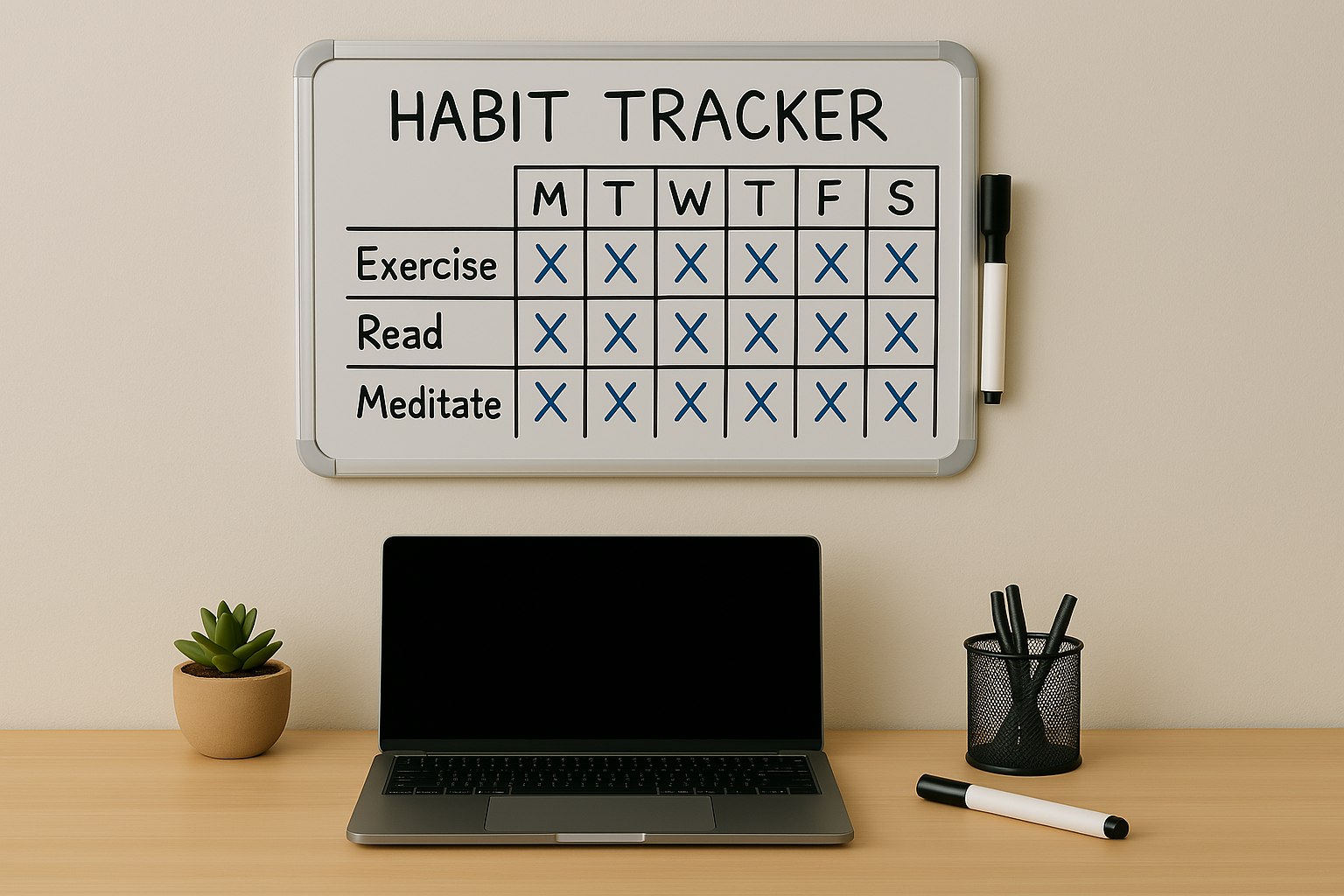
You know the drill: you set a goal, get excited, map out the perfect plan… and then, mysteriously, progress fizzles out. What happened? Your habits happened. According to The Habit Factor, goals don’t just magically materialise—you reach them by changing the habits that block your progress. Instead of fixating on the end result, focus on transforming the behaviours that quietly sabotage your success. Step 1: Spot the Sneaky Habit Roadblocks Bad habits don’t always show up waving red flags. Sometimes, they pretend to be important tasks. For example, I’ve been researching online income strategies for over ten years. I’ve started affiliate marketing, explored stock investments, built websites. Yet, every time…
-
The Skills You Actually Need (Not Just ‘Hustle!’) Day 2: Consulting My AI Business Coach So, Day 2. I start by asking AI what qualities I need to succeed as an online entrepreneur. This is what it gave me—cue the wisdom from my digital guru: Adaptability: How digital trends flip faster than you can say “SEO update.” The digital landscape is forever shifting—platforms evolve, algorithms change, and consumer behaviours are unpredictable. Successful entrepreneurs don’t just keep up; they pivot fast and roll with the chaos. Creativity & Branding: Why is having an original voice the only survival tactic? Standing out in the crowded online space requires a brand that feels…
-
Affiliate marketing is more than just sharing links—it’s about strategy, trust, and earning in real time. I’m putting everything I’ve learned to the test, refining these methods, and seeing what truly works. No gimmicks, no fluff—just real results. If you want to follow the journey and see firsthand how this unfolds, read my bio, sign up for my newsletter, and stay updated. Let's build something real together!
-
Passive vs. Active Income: The Battle for Financial Freedom You know what’s better than getting paid? Getting paid while eating snacks and binge-watching your favorite show. That’s the dream, right? Enter passive income, the glorious concept of making money without clocking in every day. But before you grab your suitcase and retire to a beachside villa, let’s talk about what passive income actually is—and why it’s not quite as effortless as some Instagram gurus make it seem. What Exactly Is Passive Income? Imagine waking up, checking your phone, and seeing that money has magically appeared in your account overnight. No, you didn’t find a long-lost inheritance or stumble upon buried…
-
Day 1: The Grand (and Slightly Terrifying) Beginning of My Online Business Adventure Alright, here we go. Day 1 of launching an online business and seeing if I can actually make money from it. No promises, no guarantees—just a whole lot of learning, experimenting, and the occasional panic attack when something doesn’t go as planned. The goal? To build passive income, which is basically money that rolls in while I sleep, eat snacks, or stare at my laptop pretending to be productive. But let’s be real: passive income isn’t as effortless as people make it sound. There’s strategy, trial and error, and probably some mild frustration along the way. But…
-
It’s freedom. It’s waking up to money landing in your account while you’re brainstorming your next YouTube video, tweaking a blog post, or just enjoying a cup of tea without the stress of chasing a paycheck. You’re already in the game—your dive into affiliate marketing, storytelling, and content creation? That’s laying the foundation for income that keeps coming, even when you’re not actively working. You’re experimenting with platforms like Wealthy Affiliate, testing ideas, and crafting relatable, engaging content. That’s your passive income machine in the making. And that’s the key: finding what clicks for you. Some people thrive on dividend stocks, where companies pay you a slice of their profits…
-
About Me – Midlife Momentum Welcome to Midlife Momentum, where I document my glorious (sometimes ridiculous) attempts to make money online and escape the 9-to-5 grind. This isn’t a polished success story, it’s a diary. A raw, unfiltered look at what works, what flops spectacularly, and what I learn along the way. I’m not here to sell you a dream, I’m testing things so you don’t have to (or so you can laugh when I mess up first). If something makes me money, fantastic. If it fails, what have we lost except time and dignity? So why am I doing this? Because midlife is not too late to chase financial…